More like a vault: you pull the handle out
and on the shelves not a lot,
and what there is (a boiled potato
in a bag, a chicken carcass
under foil) looking dispirited,
drained, mugged. This is not
a place to go in hope or hunger.
These opening lines come from a poem by Thomas Lux that I first heard on a podcast with Samin Nosrat. Samin is one of our favorite cookbook authors, who very nearly became a poet instead–she was accepted to the MFA at Sarah Lawrence, hoping to study with Lux himself. It’s no wonder I so enjoy listening to Samin talk about food, and reading this poem by Lux, which is called “Refrigerator, 1957.”
This opening image (on the shelves, not a lot) could be a fitting description of a fridge at the end of the week when a grocery shop is due, or after returning from a trip, when there’s little in the house to eat, and what there is looks a little less than food safe (dispirited, drained, mugged). It’s an image that could belong to almost any time, and any place.
This is not a place to go in hope or hunger.
When we moved to Hattiesburg, we were warned about the poor quality of local grocery stores, but we didn’t realize how much we’d miss fresh produce until we started shopping and cooking here. Despite being known as a hub city, Hattiesburg has few major chain groceries (no Trader Joe’s, no Kroger’s or Whole Foods etc). By most definitions, the city qualifies as a food desert.
It was a tough transition, moving in peak farmer’s market season from Nebraska to Mississippi. We were leaving behind some of the best produce of our life, and close community relationships with local farmers like Shadowbrook Farm. Just as the tomatoes and corn were ripening, we drove into late July in a place that was so hot that almost nothing could grow. Despite our determined optimism, we couldn’t find vegetables to get excited about either in the grocery stores or in local farms.
Let’s go back to Lux’s fridge for the next few lines:
But, just to the right of the middle
of the middle door shelf, on fire, a lit-from-within red,
heart-red, sexual-red, wet neon-red,
shining red in their liquid, exotic,
aloof, slumming
in such company: a jar
Faced with little in the way of produce, like Lux, we turned to the pantry, to jarred and canned and frozen bursts of color and flavor. We cooked in different ways.
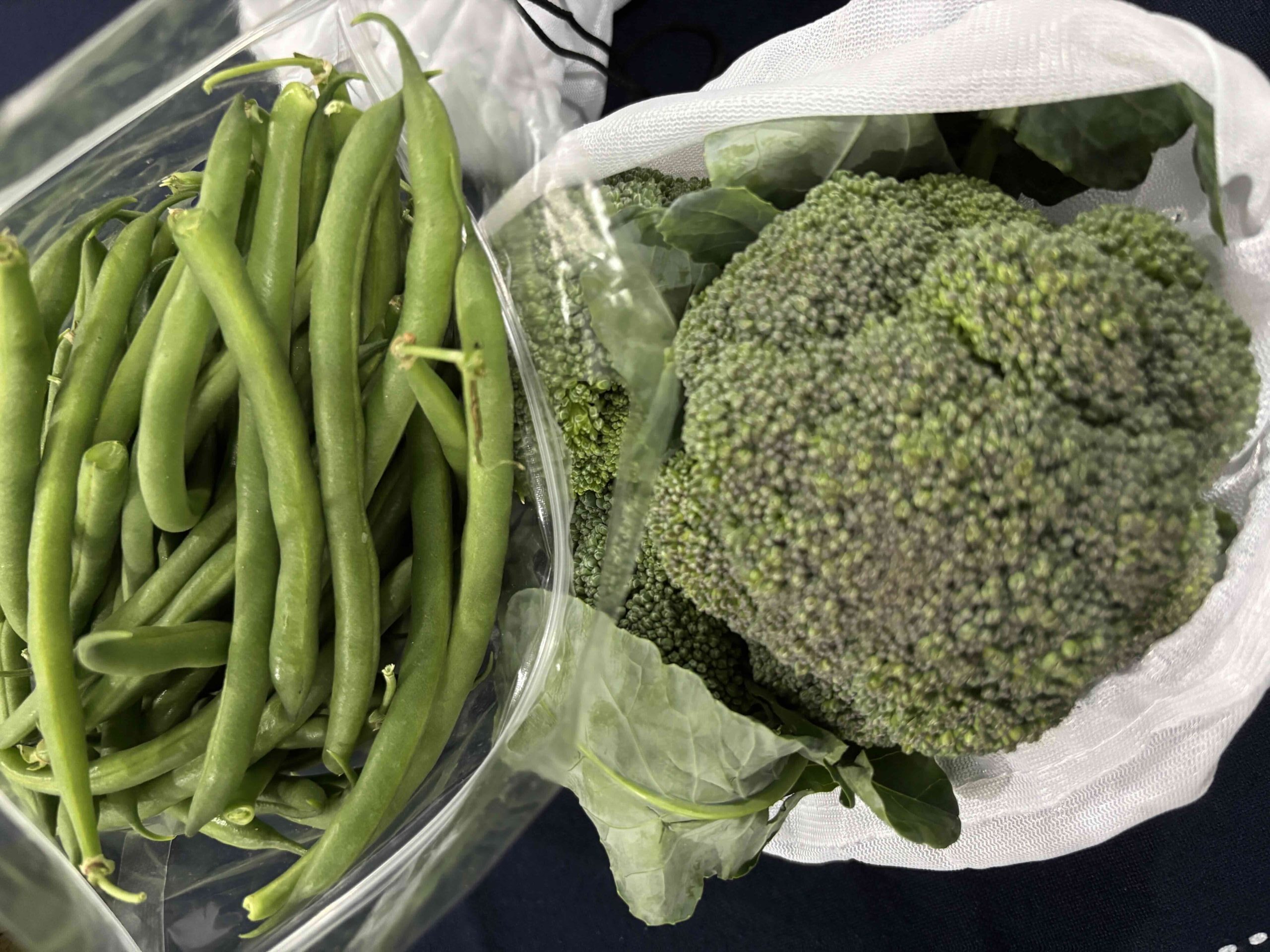
Still, when spring came, and a colleague sent me a link to a local farm box, I could hardly contain my joy.


And as we unpacked the bounty of fresh produce – far two much for a two-person household – I felt some of the same wonder that Lux finds in his jar of maraschino cherries, Three-quarters/ full, fiery globes, like strippers/ at a church social. The cherries transport him. And while you really should read the whole poem, I’m going to skip here to its glorious end:
They were beautiful
and if I never ate one
it was because I knew it might be missed
or because I knew it would not be replaced
and because you do not eat
that which rips your heart with joy.
Opening that too-big box of produce, I felt that joy that Lux describes, but I felt some urgency too. This bounty would not keep in the back of the fridge like Lux’s maraschino jar. We would need to get cooking.


The seasonal produce was an energizing prompt for a good two weeks of cooking, focused on the vegetables that we had in such abundance. Here are some of the recipes we turned to, in case you’re finding yourself with such a bounty too. In almost every case, we also had one night with the vegetable grilled with a bit of olive oil and salt. A highlight of this method was the grilled caesar salad that we made with the largest head of romaine I’ve ever seen.
Zucchini and Summer Squash:


- Socca with Zucchini and Olives, which we love with burrata instead of the ricotta salata the recipe calls for.
- Chocolate zucchini muffins. You can find plenty of recipes for these, though we are devoted to the one from the Goldenrod Pastries cookbook, which uses coconut oil and is conveniently gluten free and vegan too.
- Zucchini Scampi, a recipe that keeps the fresh squash al dente by browning them only on one side, with the same care you’d give to cooking shrimp in this method.
Green Beans


- Cooked in a grill basket with olive oil and salt, and served over polenta with this Ginger Tamarind pork chop recipe.
- Ramen With Charred Scallions, Green Beans and Chile Oil, plus a poached egg for good measure. We use this rice ramen to make it gluten free.
- Green Bean Salad With Dill Pickles And Feta, served alongside the lamb meatballs I wrote about in my last post.
Cabbage


- Buttery Cabbage-and-Sausage Pasta, a recipe which caramelizes the cabbage to make it silky and sweet.
- Okonomiyaki, with the recipe from the package for the okonomi sauce.
- And, after we returned from a long trip to a Thomas Lux style almost-empty fridge, with the last of the cabbage looking “dispirited,” we turned the last of it into a bright citrusy slaw to put on top of the salmon burgers we keep in our freezer.