Recently, a number of people in my life have been navigating new celiac diagnoses, and so I’ve been reflecting on what I wish I’d known when we made the transition to gluten free for my partner’s celiac 8 years ago.
When he got the celiac diagnosis, we started out by fixating on all the things we’d miss, and trying to recreate them gluten free. Pizza, pancakes, bread, macaroni and cheese. It was a recipe for disappointment. Even though we now make fairly successful versions of many of those items, they took time, experimentation, expensive ingredients, and a lot of failure too. And when you’re trying to get used to eating gluten free, there’s nothing sadder than bad pancakes that you put all your hopes into.
For friends starting out celiac these days, my first advice is to start with the things you already cook and love that happen to be gluten free (or almost gluten free at least). What those recipes are will depend on your cooking and eating preferences, but here are a few of the directions that advice would have taken us in if someone had told us to start by cooking what we know.


- Stir fries and fried rice: I’ve been making these to use up vegetables in the fridge since I was in college, and the only swap I needed to make to keep it celiac safe was to trade wheat-based soy sauce for rice-based tamari, which tastes the same and is increasingly easy to find. If you prefer to use bottled sauces, check the ingredients carefully, but there are gf options at most grocery stores.
- Curries: both Indian and Thai curries tend to be naturally gluten free, especially if you’re making them from scratch. But even bottled sauces and curry pastes are often gluten free, especially the more authentic ones.
- Risottos: risotto was probably the first fancy-seeming food I learned to cook. I say fancy-seeming because people are always impressed by it, but it’s not that hard to do. Most Italian flavor combinations that you might be missing as a new celiac can be worked into some variation of a risotto.
- Soups: these rarely contain wheat, and I get a lot of pleasure from slowly developing flavors on the stove. Buy boxed stock that’s labeled gluten free, or better yet, save your chicken carcasses and make your own. Better Than Bouillon paste and most powdered bouillons contain gluten, but upgrading your stock will make your soups better anyway.
- Stews and braises: separate from soups only because they require one easy modification. Any time a recipe for something like beef stew or coq au vin or gumbo calls for a little bit of flour, sub rice flour for an easy transition. These recipes usually want just a few tablespoons, and so it’s a forgiving way to start getting used to a gf roux.
- Beans: think pintos, black beans, chili, red beans and rice, barbecue beans, chickpeas, and more. Canned beans are great in a hurry, but the slow process of making beans from scratch is rewarding too. If you’re especially sensitive, stay away from dry beans that are cross-processed on the same equipment as wheat (we order ours from the gluten free section on nuts.com).


- Potatoes: I still laugh when I see a bag of potatoes at the grocery store that’s labelled gluten free. Think about all the ways you like to eat potatoes (mashed, roasted, baked, fried), and build your meals around those. Don’t forget sweet potatoes and potato salad!
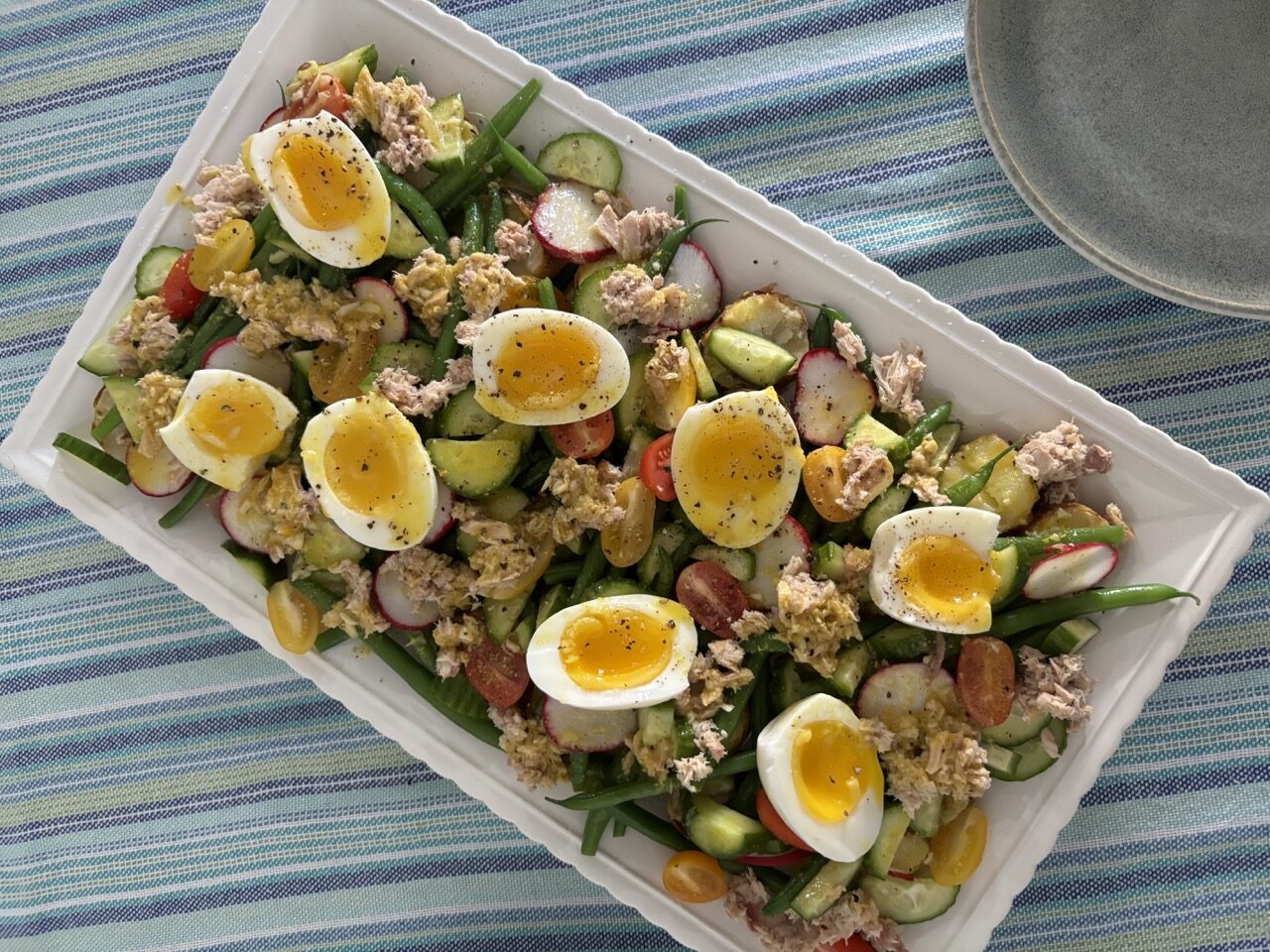
- Salads: when we eat out and gf options are slim, my partner begins to hate salads because they feel like a sad option. But at home, we make robust entree-style salads with lots of luxurious proteins and other textures and flavors. Think nicoise, or kale caesar, or anything topped with burrata.
- Tacos: or really anything else that uses corn tortillas. Think huevos rancheros or chilaquiles for breakfast, enchiladas and tostadas for dinner, and nachos for a party snack. Most salsas are gluten free, most enchilada sauces are not, but you should still check ingredients. If you’re used to using flour tortillas, the most important trick for corn tortillas is to warm them.
- Polenta or grits: iykyk. If you don’t yet have them in your repertoire, it’s a good time to try! Check the labels because some of them are cross-processed on equipment that uses wheat.
That’s more than a week of recipes, and each of these categories has many variations to explore. Most importantly, none of these will require you to purchase expensive specialty ingredients when you’re still figuring out what gluten free replacements you even like. And they’re pretty much guaranteed to succeed because you’ve probably already been making them.


If you need help thinking of naturally gf recipes that may already be in your repertoire, a cookbook I’d recommend is Cristian Broglia’s The Gluten Free Cookbook. I’ve actually never cooked a single recipe from our copy, so it may seem strange that I’m recommending it, but let me explain. First, we bought it way too late in our gluten free journey–we had already done a lot of our own research in finding naturally gluten free foods and cuisines. What Broglia’s book is best at is that research process: bringing together 350 naturally gf recipes from over 80 countries. These days, I use it more like an encyclopedia. I consult it for ideas of potential dishes to try, and then I look up five more versions of that recipe from other sources, because those research processes are fun for me.
This is probably a post that should be the beginning of a series, and I hope that it will be. (For example, I didn’t include pastas on this list because they have their own list of tips that accompany them). Still, if you have requests or questions for other starting out gf advice, please drop them in the comments!