(on returning)
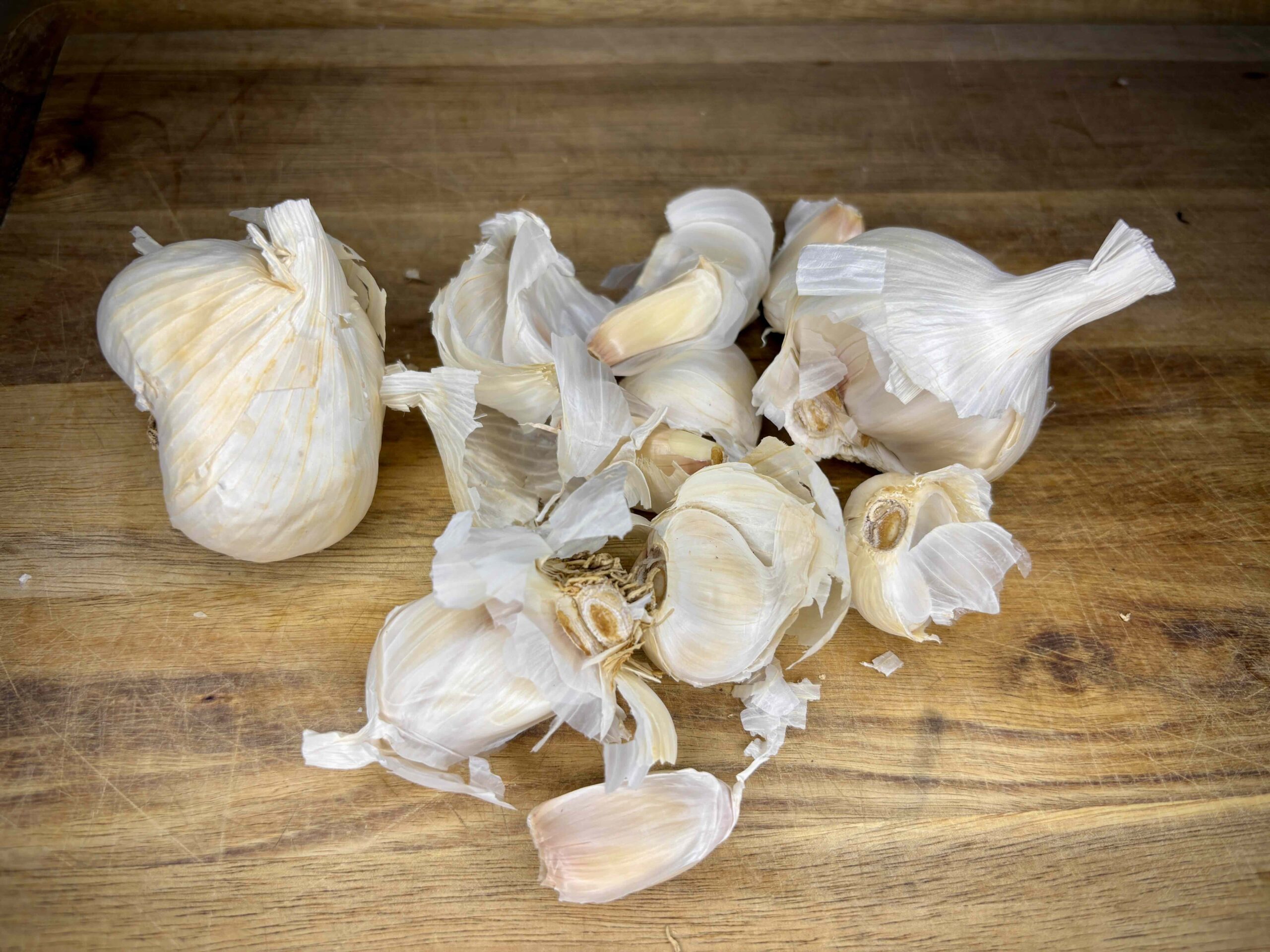
I’m in my kitchen tonight, feeding the sourdough starter after a long period of neglect, and getting ready to make my routine cracker recipe. I got back yesterday from the major conference in my field, and when I get back from a trip, the first thing I always want to do is spend time in my kitchen. Tonight, I’m making crackers, and a brilliant lentil recipe from Sohla El-Waylly’s cookbook Start Here, which calls for an astonishing and wonderful 30 cloves of garlic. As a dear poet friend once told me, the rule for garlic is “measure with your heart.”
While I strip the tiny dried thyme leaves from the twigs I hung from the ceiling weeks ago, there’s a playlist of songs from the 2000s on the kitchen speaker, music I first heard when I was moving through middle and high school. I can’t help but think about that classic reflective question: what would a younger version of me think of what I’m doing now?
At conferences, I describe the work I do in so many ways, and I think that, had a younger version of me heard me talking, she would have listened with admiration. I’m certain, though, that after she finished listening, she would have followed up with a question: “But are you a writer?”
Of course, I am a writer, but to honor the spirit of my younger self’s answer, I’d have to answer more complexly. At that age, I knew I wanted to be a writer, but I didn’t yet know all the different ways a writer could be. At that age, I thought of a writer as someone who published books–and while I have projects on the way, I wouldn’t satisfy that vision of a writer that I had when I first heard the songs I’m cooking to tonight. And yet, everything about me is a writer, just in a more expansive way. Even my kitchen is a space for writing.
There’s a half-finished draft that I thought I might post at Thanksgiving, and then at Christmas, about what type of writer or scholar I want to be. Today, at home in Hattiesburg, all the flowers are blooming, and it is spring. I’ve returned from a conference to my kitchen, and I’m returning to those half-finished words. Because this blog is a space for process, and not product, I’ll let them stand in their drafted form–
Maybe a week ago, while cooking dinner, my partner and I were talking about Samin Nosrat’s work. In a moment almost too brief to recall, he referred to Samin’s work as scholarship. There must have been onions that needed stirring, or a burner that was growing too hot, or something else more urgent in front of us, because we never paused at the word choice. We went on cooking. But I’ve been tumbling that word choice over in my mind ever since. Because we’re both academics, calling something “scholarship” could easily be a slip of the tongue, a synonym for “work” in another context. But hearing Samin’s work referred to as scholarship felt more than accidental to me–it felt right.
In a recent episode of Samin’s Home Cooking podcast, which she began with Hrishi (Hrishikesh Hirway) during the pandemic, she talks about her research process for some of the recipes in her latest cookbook. There’s a recipe for yellow cake that she worked on “for probably 30 years.” Her research process included learning about how boxed cake mixes are made, and “eventually learning about something called reverse creaming,” which was popularized by Rose Levy Beranbaum. She talks about learning the histories behind dishes like Peri Peri chicken, and the responsibility she feels to provide cultural context that will help readers understand not just how to prepare the dish, but how it came to be in the world.
When our copy of Good Things, Samin’s new cookbook, arrived, the page I was most excited by was one that other readers might skip over. It was a section I’d seen in scholarly books, but never in a cookbook before. It was titled “References and Influences.” The list includes the complete works of both the chef Yottam Ottolenghi and the poet Mary Oliver. It includes bell hooks and Ross Gay and Alice Waters and Audre Lorde. It is a list that says, “this, too, is part of cooking. This too is part of my work.”
I’ve been in universities for 15 years now, and that’s not counting the time I spent coloring in my dad’s office as a child. For the entire time I’ve spent in these institutions of higher education, interdisciplinary has been a buzzword, the kind you sprinkle into abstracts and grant applications to garner approval, the kind that you use with as much freedom as Samin encourages us to use diamond crystal salt, and yet, with not nearly as much impact as that indispensable seasoning.
Calling Samin’s work scholarship helps me reconsider what I mean when I talk about my own work. Cooking, after all, is inherently interdisciplinary. To approach even the few recipes that I’ve managed to write about in this space, I’ve had to learn bits of chemistry, and cultural studies, and history, and food science, and home economics, and horticulture, and plenty of other things too. Teaching and writing are inherently interdisciplinary too.
And yet, it still seems rare that they are actually presented that way. Samin’s page of references and influences strikes me as a statement worth making. It makes me wonder what my own list of references and influences would be–not the list of things that I cite in the various writing projects that I’m working on, but the people whose work has taught me what type of scholar I want to be. They are, increasingly, those whose scholarship defies the limits of any one discipline.
Eve Ewing, for example, recently posted a screenshot of the AI overview of her work on google. The AI-generated summary insists that Eve L. Ewing, the scholar “who focuses on social issues like the education system, public history, and racism” is not to be confused with an entirely different author of the same name, who writes the Marvel series Exceptional X Men. The AI overview makes no mention of Ewing’s poetry, which is surely a bridge too far for any algorithm to imagine.
In the months since I drafted the paragraphs above, I began reading Eve Ewing’s latest book, Original Sins, and learned that she’s also become co-owner of a community bookstore-cafe. A writer is something wider than a younger me could ever have dreamed, and a kitchen is also part of my creative space.

If I were to add a recipe to this post, it would be Sohla El-Waylly’s recipe for Brothy Black Lentils, which you’ll find on page 134 once you buy her book. Or, it would be Samin Nosrat’s recipe for Warm Castelvetrano Olives, which is scarcely a recipe at all, but still a revelation. You’ll find it on page 87 when you buy a copy of Good Things.
Instead, I’ll send you in the direction of a poem by the person who taught me to measure garlic with my heart, and who taught me to care for all the past versions of ourselves. Jessica Poli is a poet, and an editor, and a teacher, and a farmer, and a wonderful soup cook. Here’s her Ode To Seventh Grade Girls.